
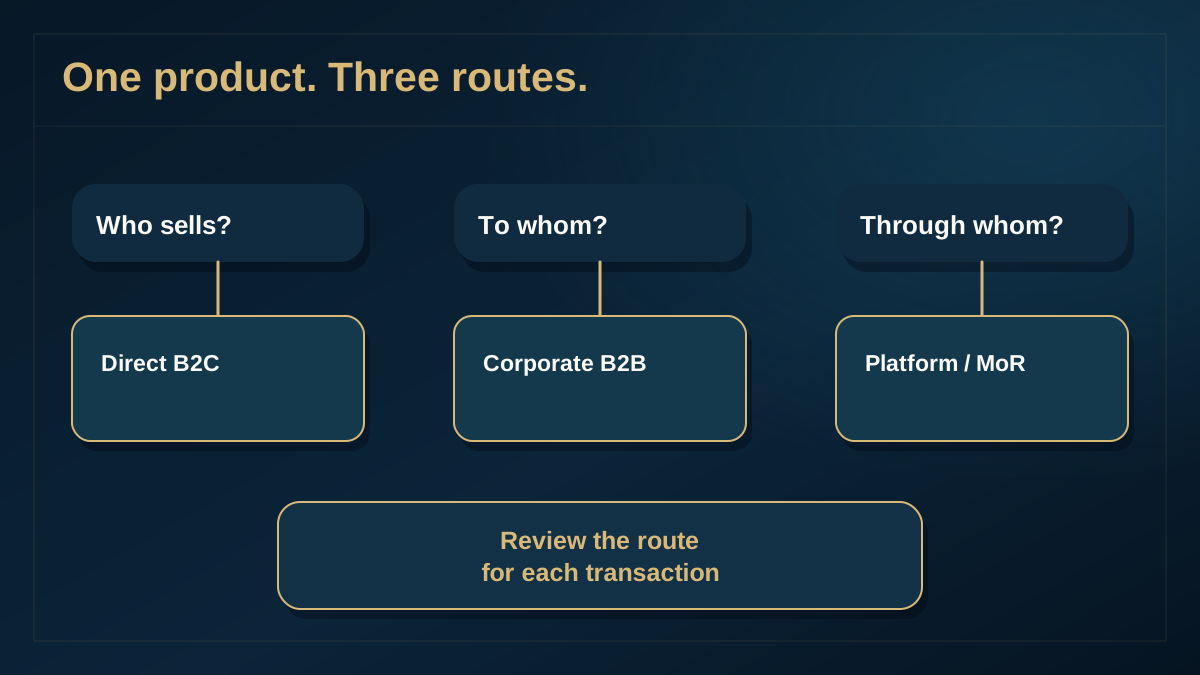
A foreign SaaS company may sell the same product directly to an individual, license it to a Kazakhstan business, and distribute it through a platform. Those transactions need separate VAT analysis. The first question is who legally sells to whom, and what evidence supports treating the buyer as located in Kazakhstan. This guide sets out a working review process for a finance or tax lead handling 2026 transactions.
Separate consumer sales from other revenue streams
Kazakhstan's new Tax Code has a dedicated chapter on foreign companies' electronic trade in goods and electronically supplied services to individuals. The State Revenue Committee (SRC) also describes conditional VAT registration for foreign companies supplying electronic services or selling online to Kazakhstan consumers. This is a distinct registration route from ordinary voluntary and mandatory VAT registration. A product labelled “SaaS” still requires a review of what is supplied under the actual contract.
Article 99(8) excludes a foreign internet company subject to conditional registration from the ordinary registration threshold in that article. A business customer's purchase cannot automatically be marked “VAT free” either. Under Article 454, a Kazakhstan buyer registered for VAT may have an acquisition of nonresident services taxable in its own hands when the place of supply is Kazakhstan, subject to that article's exceptions. Article 459 governs the place of supply for such services but excludes cases under Part 21 of the Code. A billing rule reading “B2B = 0%” is not a legal analysis.
Four facts in an illustrative ABC Corp scenario
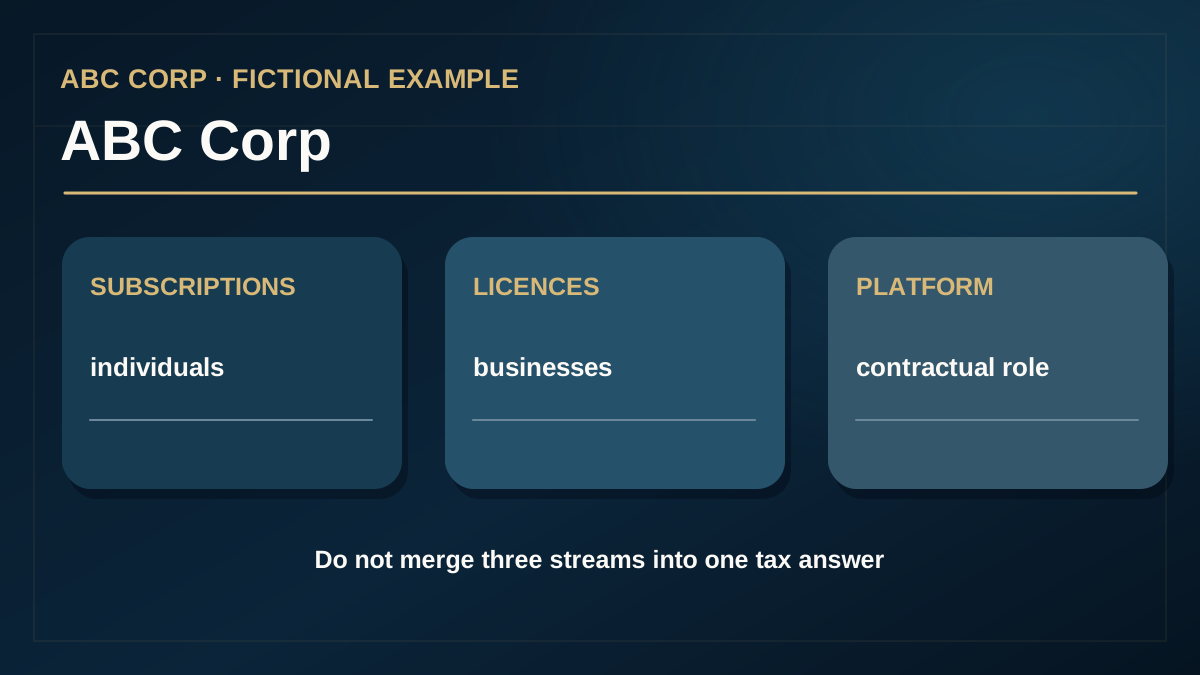
ABC Corp is a fictional foreign company. It offers subscriptions directly to individuals, licenses products to corporate customers, and sells some subscriptions through a marketplace. Those facts do not yield one VAT figure for its entire revenue.
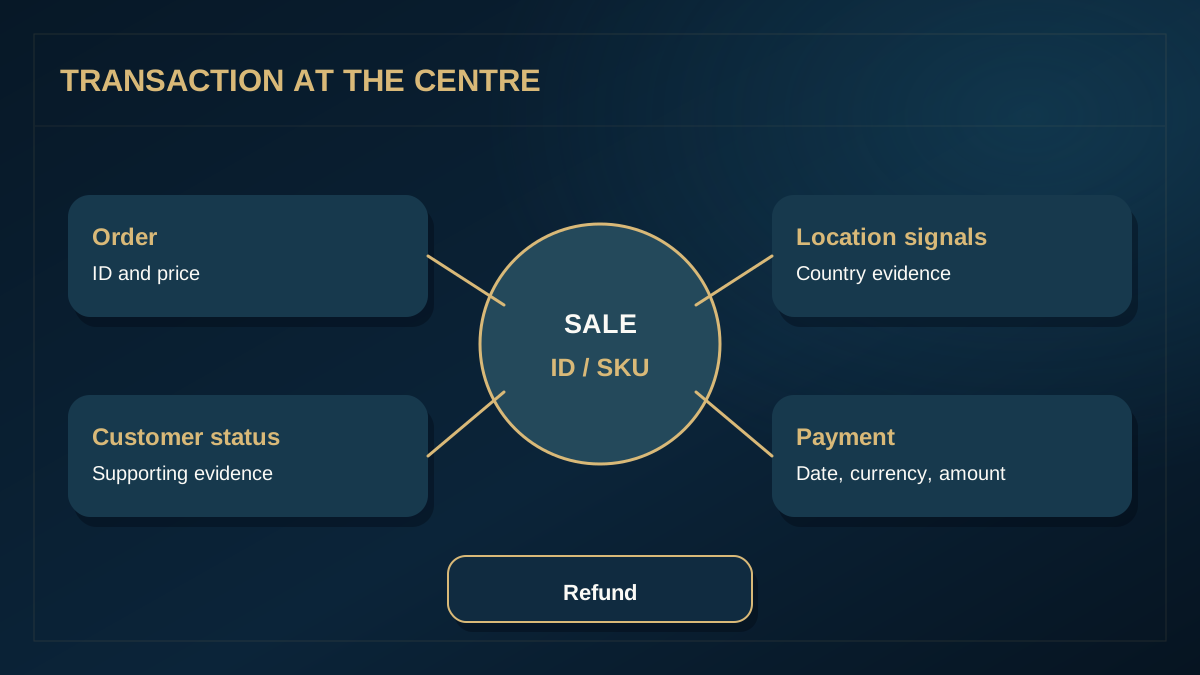
- Seller. Who is named in the terms, order confirmation, and invoice? A payment processor and the seller may be different entities.
- Customer. Has the buyer's status as an individual or business been established for each transaction? A corporate email address alone does not prove tax status.
- Location. Which buyer location signals are available at checkout and payment, and how are conflicts handled?
- Money. Where are the gross price, payments, partial refunds, and platform fee recorded? A net settlement amount does not explain the underlying sales.
Test direct consumer subscriptions against the Tax Code's special chapter. Review corporate licences under the separate B2B rules. For marketplace transactions, establish the platform's contractual and operational role first. Only then can the company calculate outcomes and configure its reporting.
A decision route for the tax and finance team
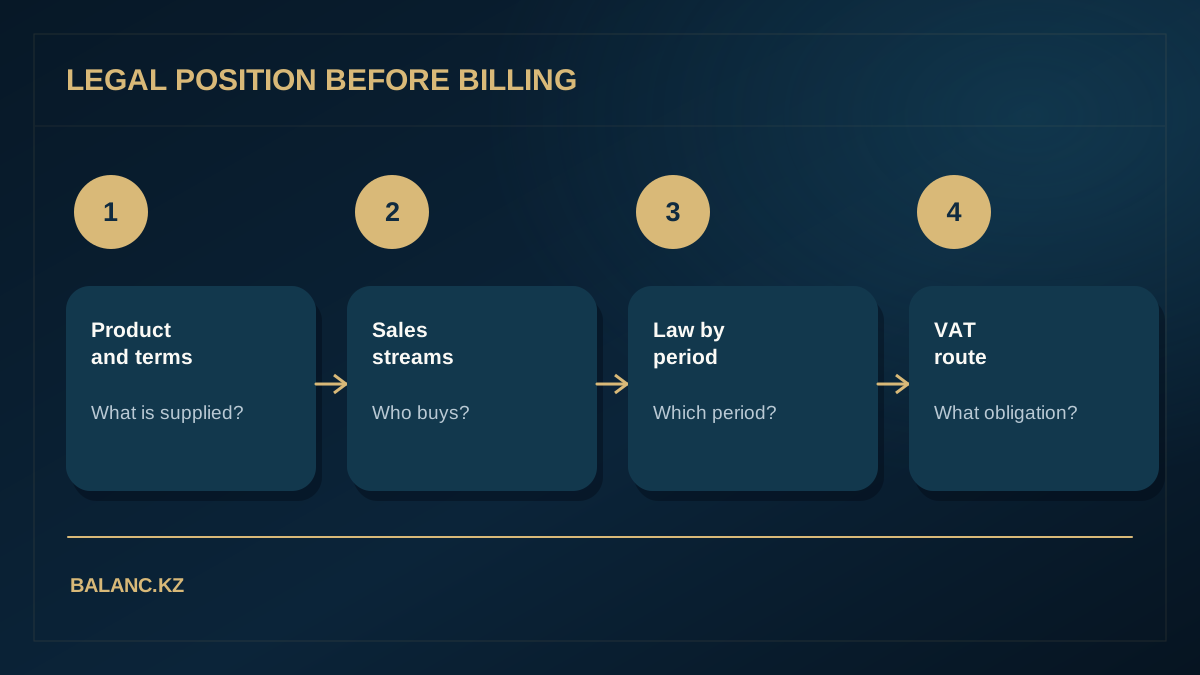
Step 1 — map the product and parties. Describe what the customer receives for every SKU or bundle. Keep the terms, sample checkout, invoice, and marketplace agreement. Digital delivery alone does not settle the legal classification.
Step 2 — segment transactions. Separate direct consumer sales, business customers, and marketplace transactions. Identify cancellations, paid trials, and mixed bundles.
Step 3 — document a position for each stream. Check customer status and place of supply against the applicable Tax Code text for the transaction date. Historical transactions require the law of their own period; a later rate cannot be projected backwards.
Step 4 — registration. Under Article 102, a qualifying foreign company submits a confirmation letter within one month of the customer's first payment and is treated as a VAT payer from the date of that payment. Paragraphs 4–5 of the Rules approved by Finance Ministry Order No. 636 specify submission through the integrated tax administration system and the required attachments. The letter is accompanied by the specified notarised corporate, state and tax registration documents and evidence of the representative's authority, with notarised translations into Kazakh or Russian. The month is the letter filing deadline, not a promise that a BIN will be issued within a month. Check that the company and transactions belong to this regime before preparing the file.
Step 5 — customer location signals. Under Article 826(2), one of four links to Kazakhstan is sufficient for an individual: residence; the location in Kazakhstan of the account bank or electronic money operator used to pay for the service; a Kazakhstan registered network address used to acquire the service; or a Kazakhstan country code for a phone number used to acquire or pay for it. Conflicting signals do not automatically erase a qualifying signal. Retain the underlying evidence and payment context for each decision.
Step 6 — calculation and payment. Article 827(1) applies the standard rate in Article 503(1), 16% in 2026, to the value of the goods or services supplied, rather than the payment processor's net payout. Under Article 827(2), the tax point is the customer's payment date. Foreign currency value is converted into tenge at the official exchange rate on the last calendar day before the tax payment date. The foreign company pays VAT for each quarter by the 25th day of the second month after that quarter. Apply these rules to the transaction in light of Article 826(4) and the transition in Article 834; do not copy the ordinary Form 300.00 timetable. Under Article 826(3), invoices for these supplies to individuals are not required.
Evidence to assemble before the first quarterly calculation
A finance team needs a transaction-level register, not just the processor's payout total. Retain order ID, seller, customer and verified status, product, price and currency, payment time, location evidence, refunds, and document identifiers. Record processor fees and cash settlements separately so a sale to the customer is not conflated with a transfer from an intermediary.
The reconciliation should trace each order into cash and explain excluded transactions. A mixed subscription or conflicting location signals calls for a reviewed exception: Article 826 requires assessment of any one qualifying location signal rather than automatic exclusion. For an Article 827 transaction, record the customer's payment date and the exchange rate from the last calendar day before paying VAT.
Where risk arises and what to control
Article 89 provides for a tax authority decision to restrict access when a foreign company does not comply with a registration notice or a notice of discrepancies following desk review. The decision is then sent to the authority responsible for mass media, which takes measures within the prescribed period. A first data error does not automatically block the website.
Assign responsibility for incoming notices. Keep registration and payment confirmations, reconcile the SRC register to internal data, and retain contracts and transactions for the queried period. Under paragraphs 5–6 of the Rules, the SRC forwards the letter for BIN assignment and publishes the register entry after receiving notice of assignment. Filing a letter and appearing in the register are distinct stages. Paragraph 7 requires notification of changes to register data within ten working days after the change. Where sales predate registration, build a timeline against the law in force for each period. Do not promise in advance that there will be no assessment, penalty, or particular outcome from correspondence.
BALANC.KZ can start with a written assessment of the sales model and missing evidence. For a defined project, see our Digital VAT support scope and conditional registration preparation. Do not send digital signature keys or customer personal data through a public form.
Frequently asked questions
Is the word “SaaS” enough to establish the tax treatment?
No. Review the product terms, legal seller, customer status, and contractual and payment chain.
Does the ordinary domestic VAT registration threshold govern foreign SaaS?
No, where the foreign company is subject to conditional registration. Article 99(8) excludes the rest of Article 99, including the ordinary threshold. First establish that the relevant transactions fall within the special regime.
When must the conditional registration letter be submitted?
Paragraph 5 of Order No. 636's Rules sets a deadline of one month from the customer's first payment. First check whether the transaction falls within this route and prepare the paragraph 4 attachments.
Is a corporate licence automatically outside VAT?
There is no universal conclusion of that kind. B2B requires a separate review of place of supply, customer status, and any tax mechanism for nonresident services.
Can VAT be calculated from the platform's net payout?
That amount may reflect fees and refunds. Reconcile the orders, agreement, and settlement before determining the tax base.
Does one rate apply to all earlier periods?
No. Historic transactions require the law of their own period. Supplies within Article 827 in 2026 use the 16% rate under Article 503(1).
Does a mistake lead to immediate access blocking?
The SRC describes a notice-based mechanism; review the specific notice and the applicable legal procedure.
Official sources
- Tax Code No. 214-VIII, version amended 1 July 2026: Articles 89, 99, 102, 454, 459, 503, 826, 827, 834 and 848.
- SRC: VAT registration routes from 2026.
- SRC: standard VAT rate for 2026.
- SRC: notices and possible platform access restrictions.
- Finance Ministry Order No. 636: conditional registration rules.