
A foreign digital supplier has a conditional Kazakhstan BIN, while its Kazakhstan subsidiary registers for VAT under ordinary rules. These records are not interchangeable. The 2026 Tax Code separates conditional registration of an eligible foreign company from voluntary or mandatory registration of other taxpayers. This guide explains the routes and the evidence needed for each.
Article 99 names three forms of VAT registration
Article 99(1) lists voluntary, mandatory and conditional registration. The first two are entered in the taxpayer database; the foreign company’s conditional registration follows Article 102. Article 94 also separates foreign companies operating through an online platform in Kazakhstan from ordinary formation of the taxpayer database. A conditional BIN and a local company’s VAT registration have different legal bases. Neither record automatically satisfies the other entity’s duty. Do not route a foreign supplier into ordinary voluntary registration merely because its question mentions VAT.
In short, conditional registration is a special register for an eligible foreign company, while ordinary registration is in the taxpayer database for an eligible person. They concern VAT but do not create one combined group registration. Check the named seller in the contract and order confirmation.
Identify the legal seller and business presence first
An eligible foreign company supplying through an online platform assesses conditional registration under Article 102 and consumer supplies under Article 826. A Kazakhstan LLP remains a different legal person even when owned by the foreign company; it assesses ordinary voluntary or mandatory registration subject to its applicable tax regime. A non-resident acting through a registered branch or permanent establishment needs a separate analysis of its transactions and status. Do not use the parent’s conditional BIN for the subsidiary’s sales, and do not infer all non-resident tax duties solely from the absence of a local office.
Do not collapse the foreign parent, local branch and Kazakhstan LLP into one taxpayer. A shared brand, website and owner do not erase separate legal identities. Determine who earns the sale and owes delivery or a refund to the buyer.
The 10,000 MCI threshold belongs to the ordinary Article 99 route
Article 99(4) sets the relevant ordinary turnover threshold at 10,000 monthly calculation indices measured on 1 January of the year. Article 99(8) expressly excludes most of that article’s provisions from an eligible foreign company’s conditional registration. Article 100 addresses voluntary registration below the threshold for eligible taxpayers; Article 101 covers mandatory registration above it and specified cases. Generally, an application after exceeding the threshold is due within five working days; if one transaction itself exceeds it, the application precedes that taxable turnover. Article 102 uses a different trigger for the foreign supplier: the first buyer payment and a one-month letter deadline. Do not transfer the local threshold to its consumer sales.
Threshold turnover is defined by Articles 99(4) and 101, not by every incoming bank transfer. Summing all deposits is not a substitute for that analysis. Article 99(3) also restricts VAT registration for taxpayers using a special tax regime; verify the regime before assigning a route.
The application, letter and effective dates differ
Under Article 99, ordinary registration follows a tax application at the taxpayer’s location and takes effect from submission. Subsequent duties, including the electronic invoicing system, depend on the applicable provisions and transactions. Conditional registration under Article 102 uses a confirmation letter due within one month of the first payment; Article 102(4) recognises the company as a taxpayer from that payment date. Order No. 636 provides the letter form, notarised documents and translations, BIN assignment and public register publication. Publication is not the trigger for taxpayer recognition. Calculate and pay consumer VAT under the separate Article 827 rules.
Track the distinct events: tax application and submission date for ordinary registration; letter, first payment and public listing for conditional registration. BIN publication and recognition under Article 102 have different dates. Do not promise the same invoice and reporting requirements for both without checking the supply type and applicable law.
ABC Corp and its Kazakhstan subsidiary are different taxpayers
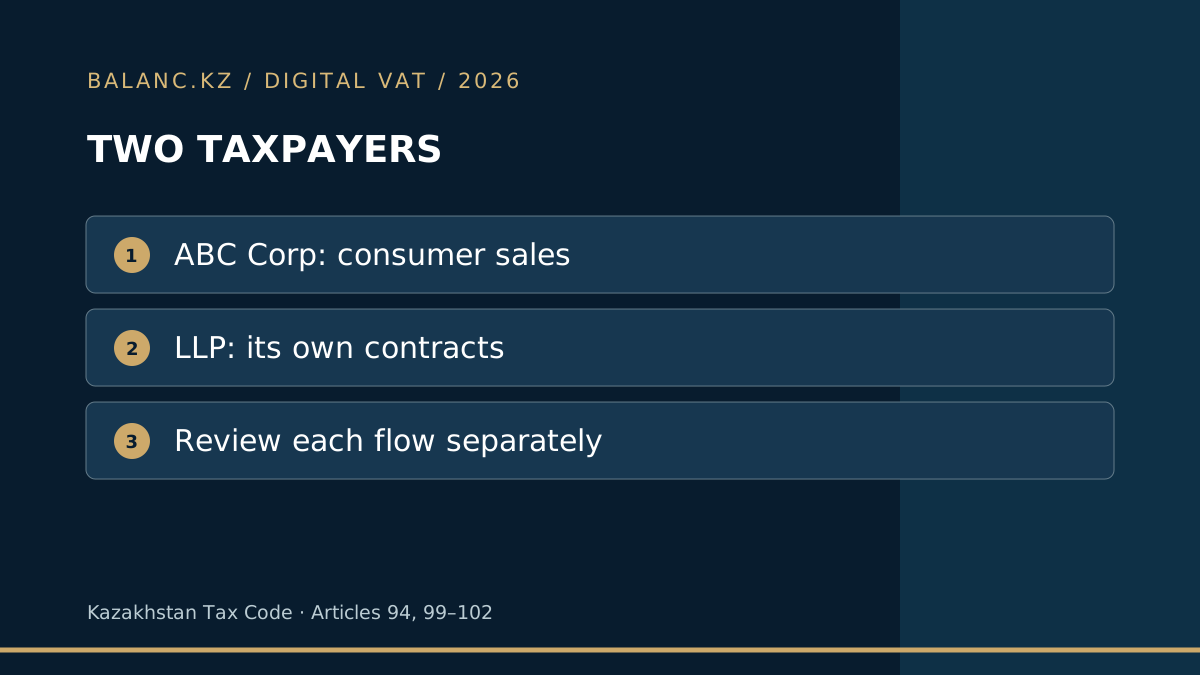
Fictional ABC Corp sells consumer subscriptions directly from abroad and receives its first payment from a buyer with a Kazakhstan signal. It assesses Articles 102 and 826. Its Kazakhstan LLP separately contracts with businesses and issues documents in its own name. For the LLP, review tax regime, turnover, voluntary eligibility and mandatory registration under Articles 99–101, along with the supply and customer. If the parent sells corporate licences or operates through a local branch, assess those flows separately; its conditional BIN does not answer every transaction. Map each legal entity, contract, buyer and payment before assigning the VAT route.
Frequent questions: “Can the parent’s BIN be used by the LLP?” No, they are separate persons. “Must the foreign supplier wait until 10,000 MCI?” No; Article 99(8) prevents that threshold from being carried over to Article 102. “Does every non-resident only use conditional registration?” No; analyse presence, branch and real contracts.
Sources
- Kazakhstan Tax Code No. 214-VIII, Articles 94, 99–102 and 826–827 (official Russian text).
- Finance Ministry Order No. 636, conditional registration rules (Russian text).
Reviewed 17 October 2026. ABC Corp is fictional; a real group requires its contracts and each entity’s status.