
An annual subscription is paid today, access runs for twelve months, and part of the price is refunded next quarter. Under the foreign supplier’s special Kazakhstan VAT regime, the turnover date follows the customer payment. A useful register preserves both that payment and later events without treating a customer refund as an automatic reduction of tax already paid.
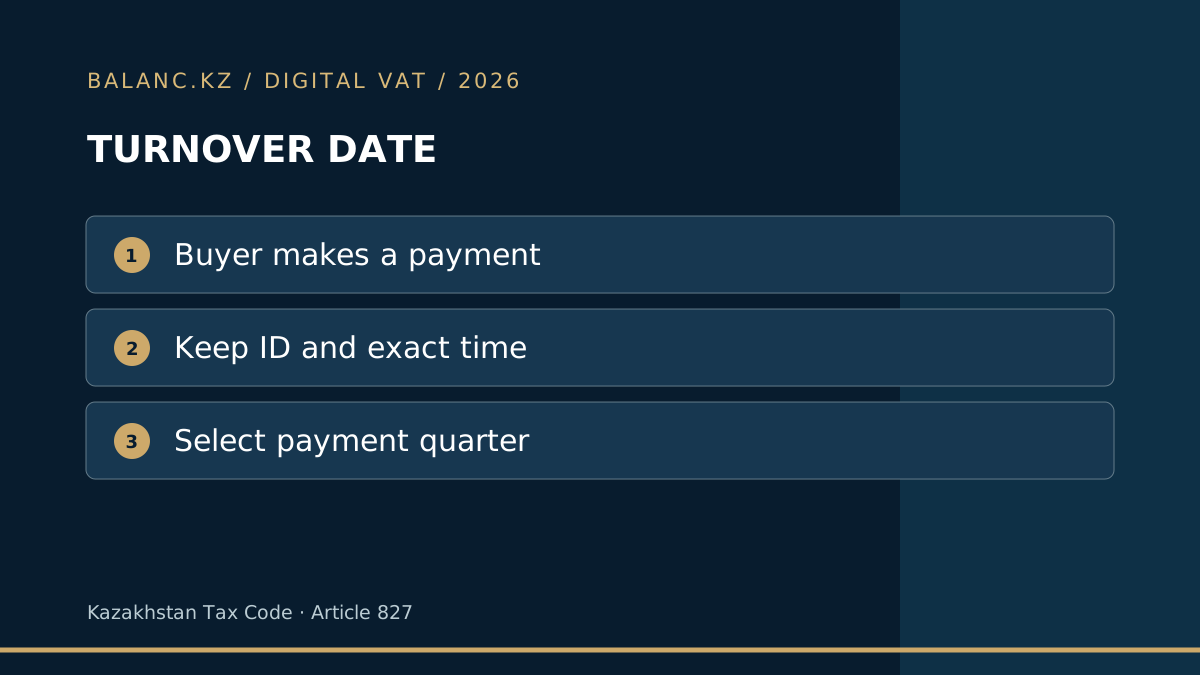
Article 827(2) uses the buyer’s payment date
For qualifying electronic sales of goods and electronically supplied services to individuals, the date of turnover under the special chapter is the date of the buyer’s payment. Keep access start, invoice and month-end dates as operational facts, but do not substitute them for the statutory date. First verify that the sale falls within Section 21: an eligible foreign company, individual customer, qualifying supply and at least one Kazakhstan signal under Article 826. Do not place corporate licences or unrelated transactions in this consumer register automatically.
A practical path is order → confirmed payment → buyer classification → quarterly register → calculation and payment. Preserve original source data after a subscription cancellation. The payment date must have a traceable source, such as the payment system event and settlement document.
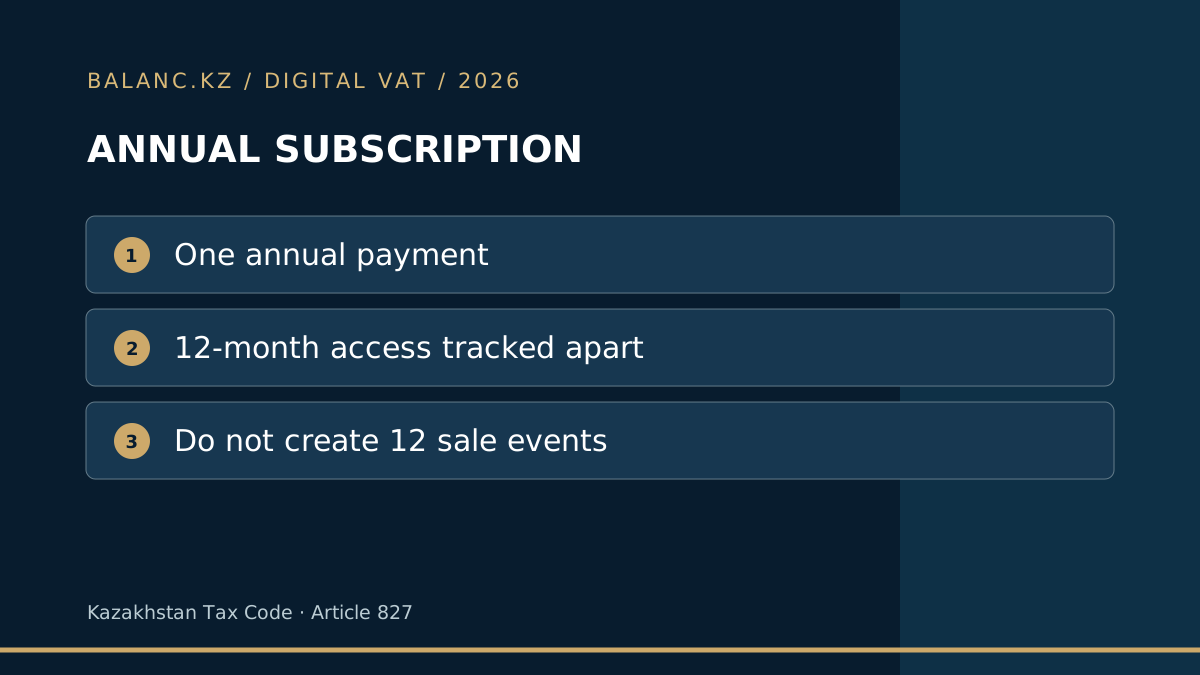
Annual prepayment: one payment, long service period
Fictional ABC Corp receives payment on 10 October for an individual’s annual subscription. Even if its internal accounts recognise revenue over several months, 10 October is the relevant payment date under Article 827(2). Record value, currency, payment ID, contractual seller and access period separately. Do not split one payment into twelve tax events merely because access lasts for twelve months. If a contract provides several actual instalment charges, record each confirmed charge and assess its relation to the supply.
For example, a 10 October payment belongs to the quarter containing that date; a service activation on 1 November does not shift the turnover date under this special rule. Internal revenue recognition serves another purpose and cannot replace the Tax Code’s timing rule.
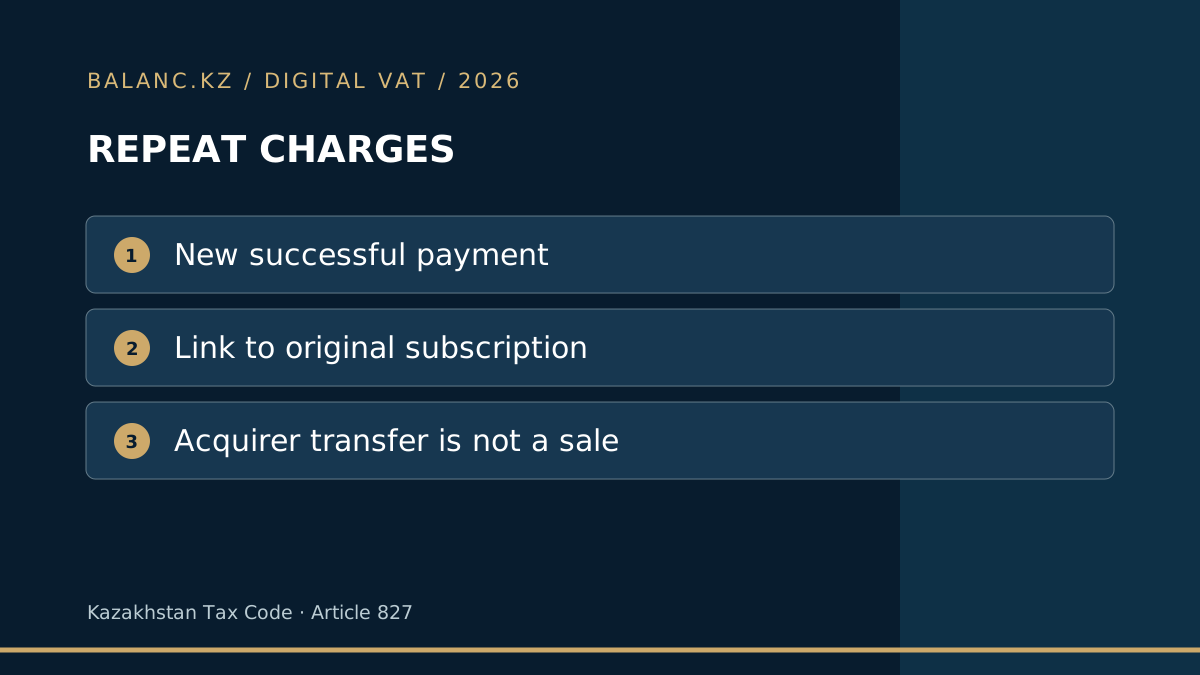
Connect each repeat charge to the original subscription
An automatic renewal is a new payment event if funds are actually charged. Link it to the subscription, plan and version of terms through stable identifiers; keep the exact time, authorisation status, final charge and any failure. An attempted authorisation is not the same as a completed payment. Select the quarter by each confirmed payment date and review source time zones. Record processor fees and remittance to the seller separately so the order, acquirer and bank are not counted as three consumer sales.
If the billing system emits a successful customer payment and the acquirer later remits the same amount to the supplier, those are not two customer sales. Keep unique payment, refund and merchant IDs to detect duplicated exports.
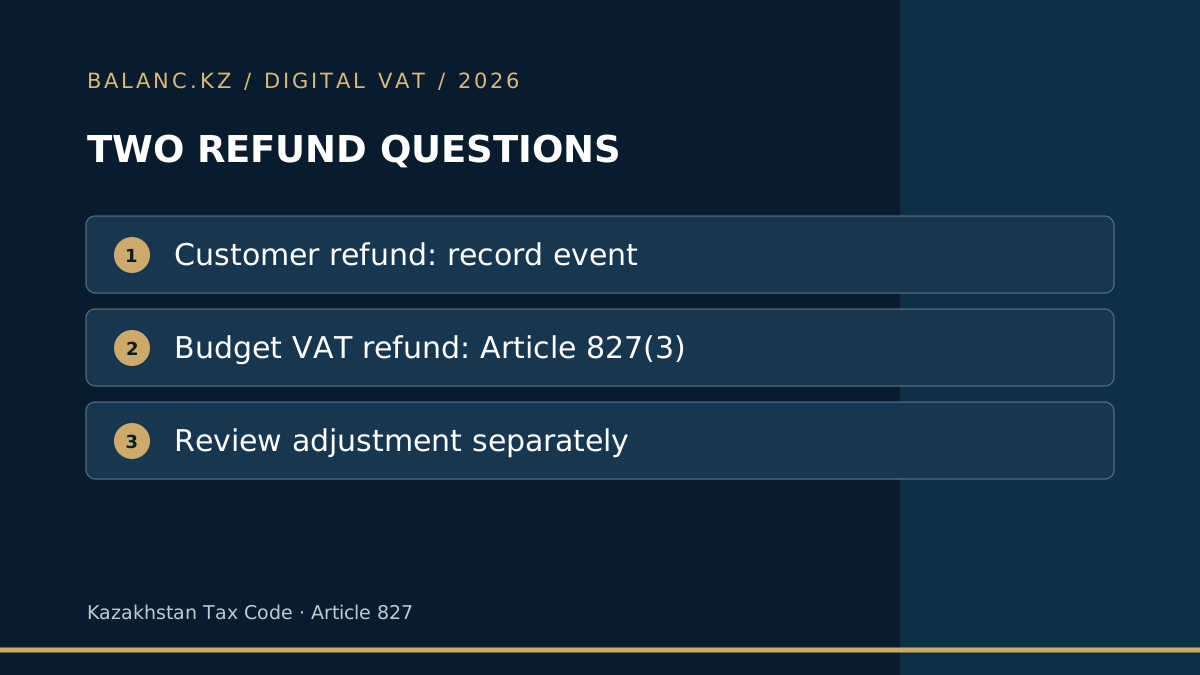
Refunding the customer is different from reclaiming VAT
If ABC Corp partially refunds the buyer next quarter, link the refund to the original payment with reason, amount, date and transfer status. Article 827(3), however, says VAT paid under that article is not refundable from the budget. A customer refund does not itself authorise an automatic deduction from next quarter’s tax or a budget claim. Any adjustment to the value or register requires a separate review of contract facts and applicable provisions; this guide does not invent a negative-turnover formula. Keep the original payment event and route the refund for tax review.
“Refund” has two destinations: the supplier can return the price to the customer under the applicable contract, whereas a budget refund is a claim against the state. Article 827(3) addresses paid VAT. It does not, by itself, cancel any contractual customer rights, but the tax effect of a customer refund needs legal analysis.
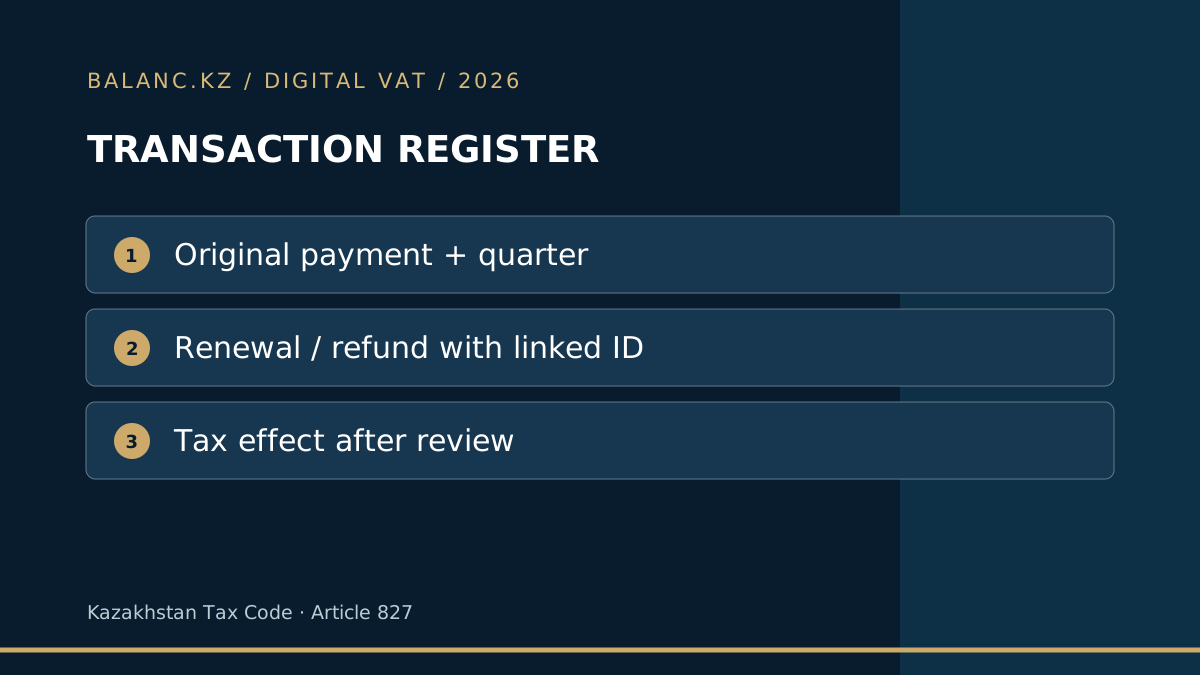
A minimal transaction register and quarterly control
Each sale row should hold transaction and subscription IDs, seller, buyer and Kazakhstan-location evidence, supply, payment date and amount, currency, channel, source document and quarter. Separate event rows should hold renewals, cancellations, chargebacks and partial refunds linked to the original payment; fill in tax consequences only after review. Article 827(1) refers to the Article 503(1) rate, converts foreign-currency value to tenge using the official rate on the last calendar day before tax payment, and sets quarterly payment by the 25th day of the second month after the quarter. Do not automatically use the order-date exchange rate or a bank conversion rate.
Before closing a quarter ask: is each confirmed charge present once, are authorisation attempts excluded, are refunds linked to the original, who was the contractual seller, and is the buyer-location ground evidenced? Flag unresolved events and name a decision owner.
Sources
- Kazakhstan Tax Code No. 214-VIII, Articles 826, 827(1)–(3) and 503(1) (official Russian text).
- State Revenue Department explanation on budget refunds (Russian).
Reviewed 17 October 2026. ABC Corp is fictional. No universal tax-adjustment formula for customer refunds is asserted; assess the case separately.